
Description
Living beings have been engaged in decision-making for a wide array
of objectives and in an amazing diversity of situations over eons of
time. Decision-making, as an activity, differs from decision theory as
a branch of knowledge. However, developments in decision theory
or the theory of choice have admittedly contributed to improved
decision-making. Quite in conformity with expectations, we find
a plethora of published materials by way of books and articles on
decision-making. On one hand, we come across volumes replete with
philosophical concepts, mathematical models, statistical methods and
computational techniques, and on the other hand, there are volumes
that tend to minimize the role of quantification and focus on the roles
of intuitions, creative thinking and experience.
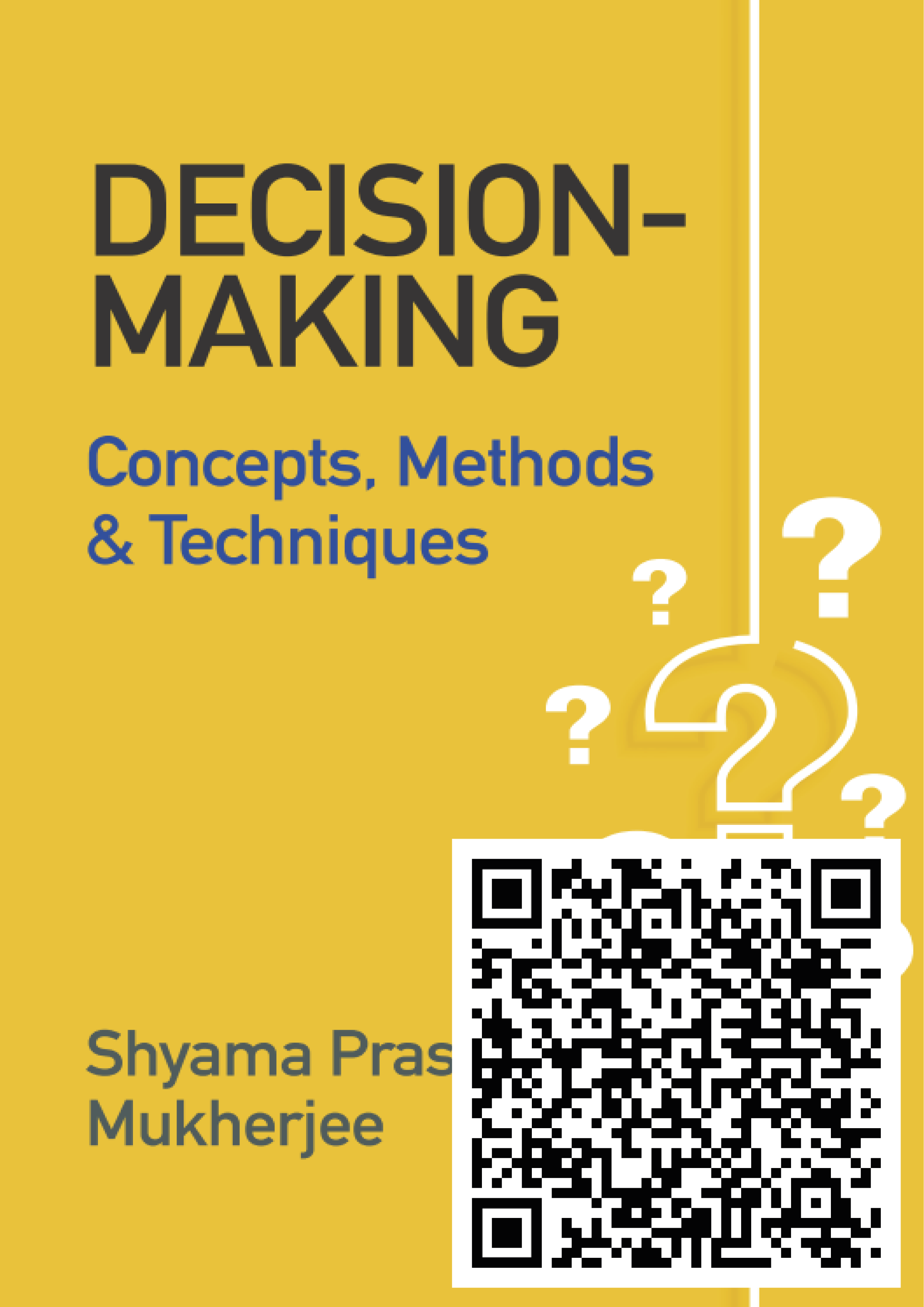
The primary aim of this book is to present an integrative and
more-or-less updated account of concepts, methods and techniques
used in decision-making in a narrative format that avoids lemmas,
theorems and corollaries along with their mathematical derivations
but does not sacrifice rigour. The wide ambit of decision-making
has not been overlooked, and an attempt has been made to present
a unified viewpoint of the activity with the common ground covered
more comprehensively rather than the distinctive methods and tech-
niques used in different environments and for different purposes. The
author would acknowledge, right at the beginning, that the vastness
of decision theory and the richness of contributions by mathemati-
cians, statisticians and social scientists, including economists, in
particular, coupled with the fact that the author should not and does
not claim anything beyond a modest acquaintance with the subject,
a big decision-making problem had to be resolved first, namely to
come up with a volume now or to continue learning more about the
subject. Many considerations, including the anticipated short length



Reviews
There are no reviews yet.